 English
 Indian
 العربية
 Español
 Deutsch
 Türkçe
 Русский
 Français (Afrique)

Amazon's started taking its tablet game seriously, but it might be too little too late for mobile players
Amazon has just announced its latest lineup of tablets, building on the original Fire roster with Amazon Alexa-branded devices spanning 8-inch, 11-inch, and 12-inch options. Crucially, though, it's also opened up to the world of Google Play Store. This is the first time Bezos's releases have allowed for additional app support from Android's biggest marketplace. That means more reliable updates and access to a much wider range of apps, all sidling up with Amazon's own Prime software.
Amazon Fire devices have always been the tablets we have at home. Restricted by their reliance on Amazon's own app system, even the slickest slab has always felt second to devices with more comprehensive app systems. We've consistently rated the Fire HD 10 among the best gaming tablets for its budget-friendly accessibility, but there's always been that heavy compatibility caveat hanging over any recommendation. With a price tag falling just under average across the rest of the competition, Amazon's new device could double down on this proposition.
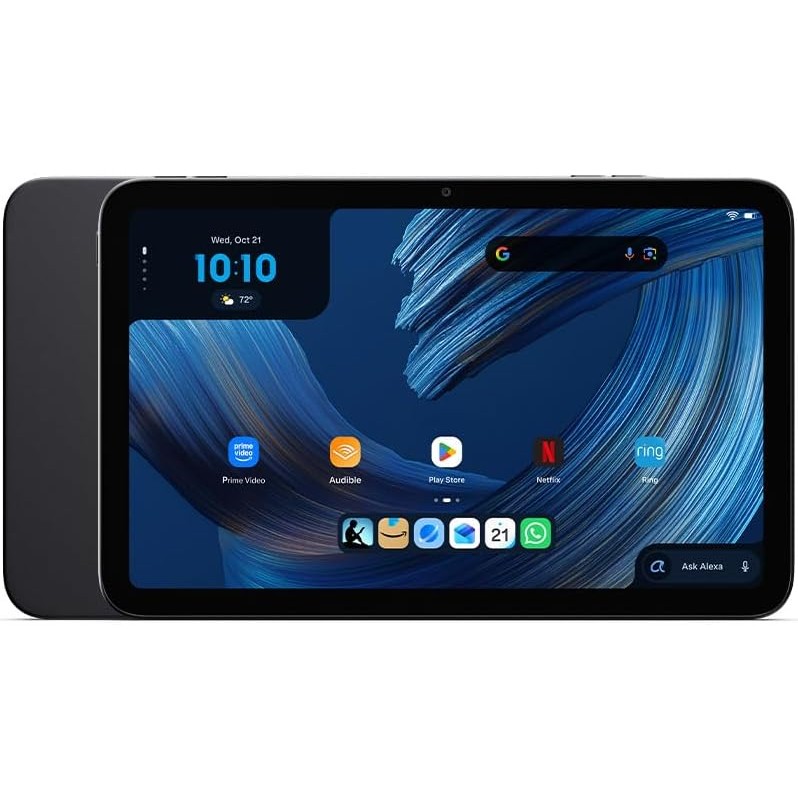
The Amazon Alexa Tablet starts life at $229.99, for a 64GB version of the smallest 8-inch model. That's... with lock screen ads (classic). Without those, you're looking at $249.99 for the base model, moving up to $549.99 for the top-range Amazon Alexa Tablet 12 Pro Matte.
We'll say Amazon's Alexa tablets start at $249.99, because picking up a $20 cheaper lockscreen-ad option doesn't exactly feel worthwhile. That puts it in line with sale prices on the Samsung Galaxy Tab A11+ and Lenovo Idea Tab, two entry-level MediaTek-touting slabs, one with a newer Dimensity 7300 chipset and the other running with Dimensity 6300.
Amazon uses the MediaTek Dimensity 8189 in its 8-inch and 11-inch models, with the 8400 model sitting in the 12 Pro. That's a pretty good result for those looking to take their tablet on the go for light work and streaming; this is a chip built far more around efficiency compared to Samsung and Lenovo's options. For anything more than a casual thumb-tap though, something like the Galaxy's Dimensity 7300 is going to be better suited. The system's Mali-G615 MC2 GPU will have an easier time running slightly more demanding games in medium settings, while the ARM-based Mali-G57 MC2 represents a slight step back in time.

More serious mobile gamers are going to have harder questions to answer. The top end of the Alexa tablet range, the matte version of the Amazon Alexa Tablet 12 Pro, comes in at $679.99 with 256GB storage. That's only $50 less than the Legion Tab Gen 5 with a bona fide Snapdragon 8 Elite Gen 5 chip at the helm ($729.99 at Lenovo). We're not even that far off the RedMagic Astra 2, a stormer of a compact gaming tablet available for $749.
So no, this isn't a new device pitched towards mobile gamers looking to invest hundreds in a high-end device. In fact, without testing, I'll provisionally say it's not going to give Lenovo or RedMagic anything too meaty to chew over. At the announcement, it feels a little late to the party, dropping now-expected features like OLED displays and 12GB RAM, while keeping its CPU cards close to its chest.
Amazon Alexa 8 | Amazon Alexa 11 | Amazon Alexa 12 Pro | |
Price | $229.99 - $299.99 | $329.99 - $399.99 | $499.99 - $679.99 |
Display | 8.7-inch | 11-inch 2.5K resolution at 90Hz | 12-inch 2.8K resolution at 120Hz |
CPU | MediaTek Dimensity 8189 | MediaTek Dimensity 8189 | MediaTek Dimensity 8400 |
RAM | 4GB | 8GB | 8GB |
It's not just the more expensive Amazon Alexa tablets looking out at the boat they just missed. Lenovo's IdeaTab sports a 90Hz display (Amazon hasn't disclosed the speed of its entry-level model's face yet), and the Samsung Galaxy Tab A11+ will send you home with double the storage for your $250 (64GB vs 128GB).
So who is the Amazon Alexa Tablet for? There's hope that this could still be one of the better budget-minded tablets at the bottom end of its price range. If you're after an everyday browsing, streaming, and working device with full Google Play Store access, it's certainly leaps ahead of what came before. Whether it's enough to worry the old guard of more demanding slabs remains to be seen.
- See all tablets at Amazon
We're also getting you prepped for this year's Black Friday iPad deals as well as rounding up the best gaming phones and best gaming handhelds for more on-the-go adventures.
Arc Raiders Frozen Trail patch notes are full of sentences that players have dreamed of for a year
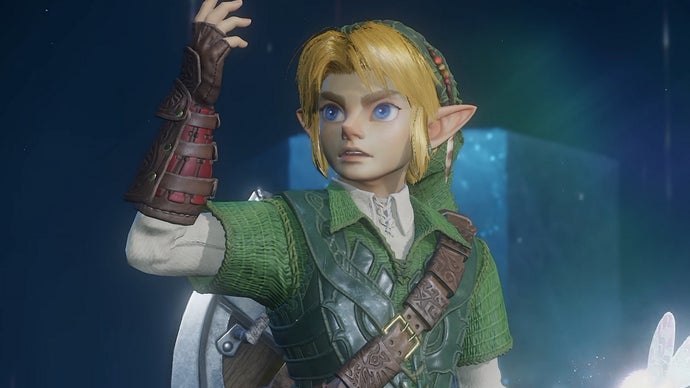
The big Arc Raiders Frozen Trail update is finally here, dropping a truckload of wintry content on players and, importantly, unloading the biggest patch notes since the start of the game. We're all going to be busy with the new map, skills, guns, gadgets, and Arc for a good while, but the 2.0 Frozen Trail update is full of tiny yet exciting changes, many of which have been requested by players for nearly a full year.
You can read the full patch notes here. I want to focus on some easily missed lines that punch above their weight. Here's an easy crowd pleaser: "Max Stash Size increased by 2 new levels (328 Max without Expedition bonuses)." With tons of new items coming into the game, I wouldn't be surprised if Embark is all but forced to further increase stash size in the future.
This may be a contentious change because it's technically a nerf to a popular strategy, but the Queen and Matriarch have had their loot reallocated once again. "Moved higher tier loot from the armor pieces of the legs to the legs pieces for Queen and Matriarch," developer Embark says.
In other words, you can't just prune leg armor to plunder easy cores any longer. Instead, you'll seemingly have to sever legs entirely or stick around for the kill, which, really, is probably how it always should've worked. Destroying legs at the joint should be more rewarding than simply peeling them, but until now you'd get literally nothing from the leg frame. My inner loot goblin isn't happy, but this just makes sense to me. However, I still think a dead Queen or Matriarch should drop way more loot than a reactor that only one person gets to loot. We'll see how it plays out.
Another point of contention will be the handling of the Anvil hand cannon, which has been pushed to blue rarity as it was "outperforming weapons both within and above its own level of rarity." Once again, this makes sense to me. With an Anvil, a Renegade, and enough ammo, you can kill a machine god.

I'm a bigger fan of the little animations that Embark's added with Frozen Trail. "Added animations to show the player interacting with their map and inventory," the patch notes read. Additionally, there's now a "mouth animation for when players are talking in proximity chat." Other "contextual" character animations include "brushing dust after sliding" and heaving "when running out of breath for a while." Anything that makes my raider feel more like a fallible container of meat struggling in a cyborg apocalypse is welcome.
Here's Embark finally tackling something that always bothered me: "Adjusted how character sounds are occluded by walls and obstacles for more natural audio positioning." My hope is that this will improve Arc Raiders' directional audio, which could get wonky in firefights in some buildings.
The gameplay section of the patch is where the real gold lies. We've got "more contextual Ping information for ARC and various objects." When looting, you can "drop loot to the ground directly from containers." While crawling around, "you can now open the map while downed." If your backpack looks fabulous but has an extremely visible light source, you can now toggle it off to "go full stealth mode."
One of the new movement changes could interact with the updated skill tree, which pushes agility more heavily, in interesting ways: "Added Scrambling. Sprinting at steep slopes will allow you to scramble up them for a short time." Sandwiched between added wall run and mantling maneuvers, this might actually make a noticeable difference.
Embark mentions the dynamic loot zones it's testing in new map Pendola Pass, designed to make scavenging less repetitive match over match by changing loot hotspots. The exciting part here is what executive producer Aleksander Grøndal told me in a recent interview: assuming initial feedback and implementation for dynamic loot zones goes well, "it will be fairly straightforward for us to go back and reapply that to the existing maps as well." Even as a map event, I'd love to see old zones find a little more variety.
Prospice: Anomalous Logistics is SnowRunner except instead of lengths of copper pipe, you're transporting the body parts of eldritch gods
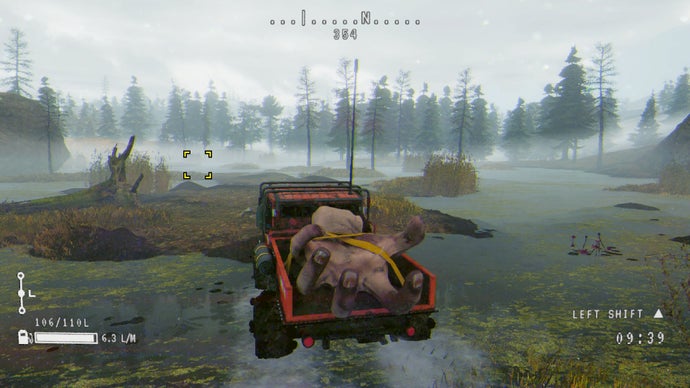
Viewed from the front, my truck, with its winch and thick off-road tires, could be straight from SnowRunner central casting. Sure, it would an off-off-Broadway production of SnowRunner, with the polycount and texture resolution of a PS1-era take on the driving simulator, but I'm looking at a vehicle that is ready to struggle through thick mud and deep water; a petrol-guzzling workhorse.
Then I walk around the side and glimpse the load it's hauling: a giant severed hand, freshly cut from the corpse of a buried god.
Prospice: Anomalous Logistics has all the markings of SnowRunner, MudRunner and Spintires games, the driving simulators with a focus on overcoming difficult off-road terrain, but it's seen through the lens of eldritch horror and the new weird.
WoW: Forever is "simplifying" Blizzard's usual PvP but also adding a controversial weekly grind
World of Warcraft: Forever won't be emulating the retail or Classic versions of Blizzard's beloved MMO when it comes to PvP – it's got its own way of approaching it.
The studio outlines as much in a new post about how PvP works in WoW: Forever over on its official website, and it's somehow easier than it was back in the early 2000s but also… a tad grindy?
Blizzard first describes it bringing "a refreshed sense of purpose to every match-up" with an approach that "gives players more reasons to take part throughout the season while preserving the spirit of competition that defined PvP in the original World of Warcraft."
The developers explain that they "wanted to keep the design pillar of 'Approachable and Familiar' firmly in view: simplifying the original Honor System while staying true to its roots" – so, how does it work?
Well, there are two parts to World of Warcraft: Forever PvP: Honor and Rank Points. Honor is a form of currency you earn by taking part in PvP content, with Blizzard promising to ensure that "acquisition rates are more consistent across the board."
You gain Rank Points from specific PvP activities, like battlegrounds and certain quests. This system is similar to the original World of Warcraft's own, as you'll be working toward titles like Grand Marshal or High Warlord (depending on which faction you've chosen, of course).
There's a catch, however: "Ranks have a weekly cap, retaining the foundation of the original system while making the journey more accessible." That makes it easier, sure, but it also feeds into a weekly grind – and as a Final Fantasy 14 player myself, I'm all too familiar with (and not really a fan of) weekly grinds.
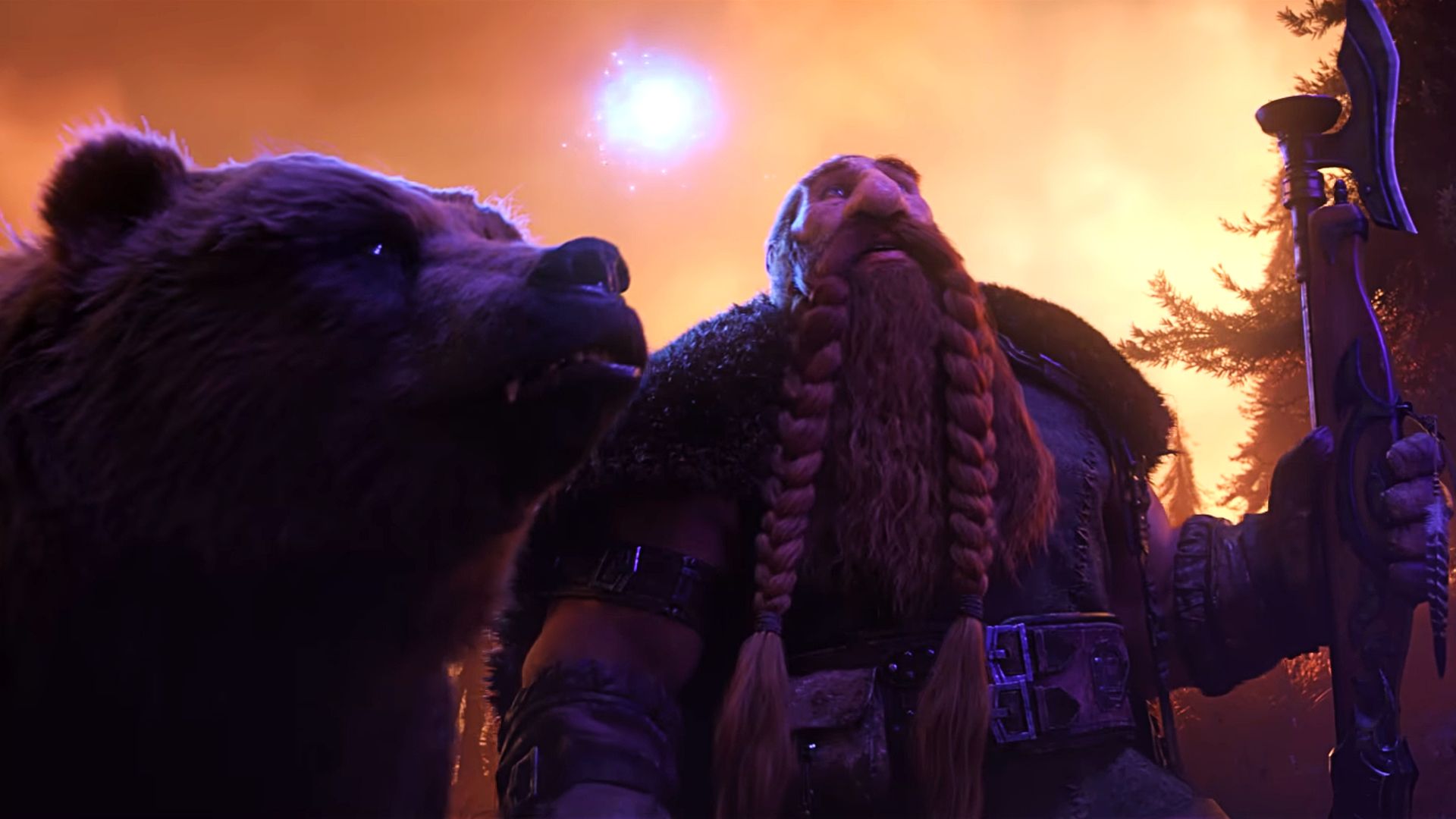
There are more layers to this, too, with Blizzard going on to detail how seasons function: "During a PvP season, players can progress through the ranks and earn Honor. Each season also includes a journey with weekly tasks to complete." Sigh. Yes, weekly.
"Successfully completing those tasks grants Honor and Rank Points, and three tasks each season also grant a Legacy Point," the devs continue. "Completing these tasks is part of the seasonal journey, and because they are tied to the Legacy System, they remain available to complete in future seasons."
In other words, it's definitely a bit simpler to get where you want in PvP rank-wise, but I'll feel more inclined to be consistent. You know, whether I want to be or not – and I'm evidently not alone.
A comment sees a fan saying, "Please don't do the weeklies thing." Another adds, "One of the things I'm trying to avoid is weekly checkboxes I feel I need to hit. Just having X item cost Y Honor and Z rank is enough." A separate response reads, "Please don't do that system. It's unhealthy at all. Having to farm every freaking week without taking any break is not fun."
Overall, though, it's admittedly certainly an accessible PvP system. Blizzard seems to know it as well, concluding, "With more ways to make progress each week and meaningful goals to pursue throughout the season, PvP in World of Warcraft: Forever gives players a clear path to jump in, compete, and keep building toward what comes next."
Fingers crossed it all plays out smoothly come the MMO's November 4 release.