 English
 Indian
 العربية
 Español
 Deutsch
 Türkçe
 Русский
 Français (Afrique)

IPL owners show interest in BBL teams amid concerns over Cricket Australia’s terms
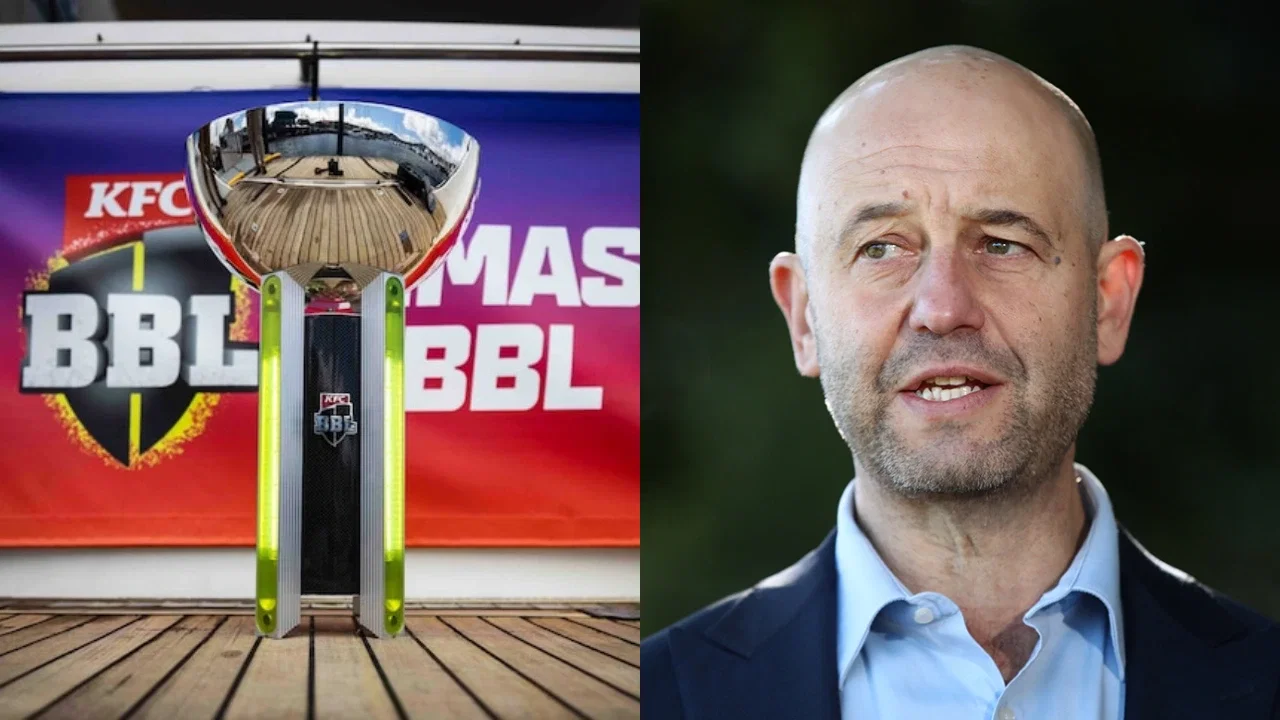
IPL team owners and other Indian investors have shown early interest in acquiring Big Bash League (BBL) franchises after Cricket Australia (CA) opened select teams to private investment. However, prospective buyers are reportedly wary of the commercial restrictions attached to the ownership model. librea.one
Raine Group, a US-based merchant bank, is managing the privatisation process after overseeing the equity sales for The Hundred in England. Cricket Australia chief executive Todd Greenberg has called it a billion-dollar opportunity to bring private investment into Australian cricket over the next decade.
IPL Owners See Red Flags in Cricket Australia’s BBL Model
According to Cricbuzz, the Melbourne Renegades are the only BBL franchise currently available for a 100 percent acquisition. Cricket Australia is overseeing the sale instead of Cricket Victoria, with the deal expected to be completed by Christmas.
However, the new owner will have to build the team’s brand and fan base from scratch. The Hobart Hurricanes and Perth Scorchers are expected to be next, but private investors will reportedly be limited to 49 percent stakes. IPL owners usually prefer controlling stakes in overseas leagues.
The model is different from other leagues where Indian investors have entered. IPL groups have full ownership of teams in the SA20, ILT20, CPL, and Major League Cricket, while some investors in The Hundred also hold controlling stakes or significant operational control.
Cricket Australia Wants to Retain Control Over Big Bash Operations
Cricket Australia chairman Mike Baird has made it clear that the governing body will retain control over key areas of Australian cricket. Speaking about the investment model, Baird said:
“CA and its members will maintain control over the most significant aspects of Australian Cricket operations, including international scheduling, player availability, the Big Bash Leagues salary caps, branding proposals as well as the reserve price for a licence to operate that must be achieved, and approval of investors.”
According to Cricbuzz, Cricket New South Wales also opposes private investment in the Big Bash League. The disagreement has added to the challenges around the proposed ownership model, while IPL investors continue to assess the commercial terms.
GMR, co-owner of Delhi Capitals, had previously explored a partnership with Cricket NSW. The group held talks in Sydney during the fifth Test of the 2024-25 Border-Gavaskar Trophy. GMR also owns Hampshire County Cricket Club in England.
Player Availability and Travel Add to IPL Owners’ Concerns
The availability of Australian stars is a major concern for potential investors. The Big Bash League usually runs alongside Australia’s international season, unlike the IPL, where franchises have greater certainty over the availability of leading Indian players.
Pat Cummins has played only seven BBL matches since 2016, while he has played 76 IPL games. The BCCI also ensures the availability of contracted and marquee players for the IPL, giving franchises greater commercial certainty.
Overseas player availability is another concern. The BBL competes with leagues in South Africa, the UAE and Bangladesh, while Australia’s higher taxes could make those tournaments more attractive to international players.
Travel could also increase costs for BBL franchises. A trip to Perth can take around five to six hours by air, while teams in the SA20 generally face much shorter journeys between cities.
Potential investors are also looking at Cricket Australia’s media rights deal and the influence of the Australian Cricketers Association. CA is currently three years into a seven-year broadcast agreement. Most BBL teams are reportedly profitable, which could attract investors.
An IPL source told Cricbuzz: “The ECB was difficult; CA is five times tougher to negotiate with.”
Also read: Cricket Australia begins BBL privatisation process with Melbourne Renegades license sale
Delhi Sports Scheme Offers Rs 2,000 Monthly Support To Young Athletes
The Delhi government on Thursday approved a new grassroots component under the Mukhyamantri Khel Protsahan Yojana, offering eligible young athletes training at government sports centres and stadiums a monthly incentive of Rs 2,000.
Chief Minister Rekha Gupta said the initiative is aimed at supporting emerging athletes and helping them meet essential expenses, including nutrition, local travel, basic sporting equipment and medical needs.
Delhi Sports Scheme Targets Young Athletes
The new ‘Grassroot Training Support Assistance’ component was approved at a Cabinet meeting chaired by Gupta.
The assistance will be available to athletes in the Under-14, Under-17, Under-19 and Under-21 categories who are regularly enrolled and training at Delhi government sports centres and stadiums.
Up to 25 per cent of regularly enrolled trainees at each centre or stadium will be eligible for the monthly support. Normally, a maximum of 100 athletes at an individual centre or stadium will be covered, while the limit can go up to 150 at larger venues with higher trainee numbers, subject to budget availability.
Rs 2,000 Assistance Linked To Performance
Beneficiaries under the Delhi sports scheme will be selected based on their sporting performance and potential, attendance, discipline and financial need.
Athletes must fulfil the prescribed eligibility conditions, including regular enrolment and a minimum attendance of 80 per cent.
Gupta said the selection process will be structured, with beneficiaries’ performance, attendance and discipline reviewed every quarter. The government aims to ensure that financial assistance reaches athletes who are training consistently and demonstrate the potential to progress.
Education and Sports Minister Ashish Sood said Delhi has no shortage of sporting talent and that creating opportunities and providing necessary support remains the government’s priority.
“Through this decision, we are ensuring that no talented athlete is forced to give up their sporting dream because of financial difficulties. This is our commitment to building a stronger, sports-rich Delhi,” Sood said.
Mukhyamantri Khel Protsahan Yojana Expanded
The grassroots training support is an expansion of the existing Mukhyamantri Khel Protsahan Yojana, which already provides financial assistance to athletes at different levels.
Under the existing Training Support module, top-ranked school-level athletes can receive assistance of up to Rs 5 lakh annually for coaching, equipment, competition participation, nutrition and other training-related requirements.
Elite athletes representing Delhi and India at the highest level can receive up to Rs 20 lakh annually.
The Participation Support component provides reimbursement of eligible expenses up to Rs 2 lakh per athlete for recognised international competitions.
Delhi Government Focuses On Grassroots Sports
Under the Achievement Recognition component, athletes who deliver outstanding performances at state, national and international competitions are also eligible for cash incentives as prescribed under the scheme.
Gupta said identifying sporting talent and developing it consistently from the grassroots level is essential for achieving sporting excellence.
The new monthly assistance is therefore aimed at strengthening the early stages of an athlete’s development while complementing the wider financial support already available under the Mukhyamantri Khel Protsahan Yojana.
SEO Keywords: Delhi sports scheme, Mukhyamantri Khel Protsahan Yojana, Rs 2,000 monthly incentive, young athletes in Delhi, grassroots sports support, Delhi government sports scheme
Meta Description: Delhi government expands the Mukhyamantri Khel Protsahan Yojana with Rs 2,000 monthly support for eligible young athletes training at government sports centres.
Young India’s Sports Education Push: YIPESU and RevSportz Join Hands to Build Industry-Ready Professionals

As academics, the idea was always to design a course that reflects the realities on the ground in India and helps students and professionals make significant advances in their careers. The objective was to bridge the gap between academics and practice, bringing together leading professionals to teach, mentor and make a difference.
You cannot get any of that from ChatGPT or AI. No tool can simply generate a course of this nature because it has been curated around market needs and involves men and women of the highest academic and professional standing.
That is what we have been able to do with the Young India Physical Education and Sports University (YIPESU) in Telangana. The university’s fellowship programme, the first of its kind in India, will be launched in November and aims to make a telling contribution to the sports ecosystem. It will give prospective students access to leading academics and industry professionals, preparing them for a significant push in their careers.
Bridging the gap between classroom and the real world
The programme brings together theory and practice, with on-ground internships and experiential learning opportunities. Its curriculum covers sports media, sports science, event organisation and management, ethics and doping, law, and a host of other key subjects. Curated over several months, it is designed to create new pathways for aspiring professionals looking to build careers in sport over the next decade.
The idea is simple. India will play host to the Commonwealth Games in 2030 and is mounting a bid to host the Olympic Games in 2036, among other major sporting ambitions. Yet, at present, we do not have enough homegrown professionals equipped to lead projects of this scale. With sports leagues consolidating their hold over the sports economy, it is essential that professionals learn the art of running teams and organising major events. At the same time, it is equally important to understand the fundamentals of sports science and law, as well as the history and practice of sport.
It is also an excellent opportunity for the state’s sports personalities to contribute to mainstream sports promotion and management. This has pivotal significance on account of India’s ambitions to host marquee multi-sport events including the Olympic Games.
Personally, I have very rarely taught in India. Having taught in different parts of the world, it is time I did so in my own country.
The partnership between YIPESU and RevSportz, now formalised with the signing of the MOU in Hyderabad in the presence of Shri Jayesh Ranjan, Special Chief Secretary, and Shri Kishore Gopinathan, Vice-Chancellor, YIPESU, offers me that opportunity.
Everyone at RevSportz is delighted by the possibilities this partnership presents. We are looking forward to the course beginning on 11 November, which also marks National Education Day.
Follow Revsportz for latest sports news
The post Young India’s Sports Education Push: YIPESU and RevSportz Join Hands to Build Industry-Ready Professionals appeared first on Sports News Portal | Revsportz.
The Gopichand Model – Why India Should Now Think of Badminton Dominance

My final takeaway from an afternoon at the Pullela Gopichand Badminton Academy was perhaps the most overwhelming. I had gone expecting world-class badminton courts. I came away thinking about an ecosystem and an understanding of what high performance actually means. Consider what has been assembled in Gachibowli. Across the academy complex are multiple badminton courts, a full-size heated swimming pool, gymnasium, running track, yoga and aerobics studio, physiotherapy and massage facilities, and dedicated recovery rooms with ice baths and steam. There is accommodation for around 100, an in-house cafeteria and even a conference room specifically for coaches.
But the real story lies beyond the hardware. The high-performance ecosystem incorporates nutrition, physiology, psychology, physiotherapy and biomechanics, alongside strength and conditioning, sports research, and video and performance analysis. In other words, an athlete doesn’t merely come here to play badminton. He or she comes here to become an athlete.
Training, fitness, nutrition, recovery, injury prevention, rehabilitation, mental conditioning and match preparation become parts of the same process. As we left the academy, Boria Majumdar insisted that we see the high-performance laboratory, where injury management and rehabilitation are conducted in line with world-class equipment and systems. And watching the academy function, what struck me was the discipline binding all of this together. There was no chaos masquerading as intensity. There is a tranquil calm about the place, as though the training had structure, the coaches had roles and the almost invisible administrators had responsibilities. That may ultimately be Gopi’s greatest achievement.
India often confuses sporting infrastructure with sporting ecosystems. We build stadiums, purchase equipment and announce centres of excellence. But a treadmill doesn’t create an athlete. An ice bath doesn’t improve performance by itself. A sports scientist cannot compensate for poor coaching. Excellence emerges when all these elements are integrated around the athlete by someone who understands how the pieces fit together.
And that prompted one tantalising thought. I thought Boria articulated it rather well: “What if India could create just one such badminton ecosystem in every state, each anchored by one exceptional Indian coach?” Not another 28 Gopichands… that is impossible. But 28 coaches empowered to think like institution builders. Give them world-class courts, sports science, recovery, strength and conditioning, nutrition, analytics and administrative support. Give them autonomy, hold them accountable and then give them ten years. Suddenly, talent doesn’t have to travel hundreds or thousands of kilometres to Hyderabad. A gifted child in Assam, Kerala, Rajasthan, Odisha or Madhya Pradesh could enter the same performance pathway closer to home.
India has already proved that this model can work. This academy has been associated with the development of Saina Nehwal, PV Sindhu, Kidambi Srikanth, HS Prannoy, Parupalli Kashyap and Sai Praneeth, among others. That isn’t an isolated champion. It is evidence of a system producing excellence across generations. Which is why I left Gachibowli thinking that Indian badminton’s next great leap may not require discovering another miracle.
The blueprint already exists; we need to build the coaches and simply replicate the ecosystem. Take sports science to the talent rather than waiting for talent to find its way to Hyderabad. Create 28 genuine centres of excellence and give the project a decade. Do that, and the ambition need no longer be occasional Olympic medals or a few players in the world’s top ten. It could be something far more audacious: India dominating the world stage in badminton!
The post The Gopichand Model – Why India Should Now Think of Badminton Dominance appeared first on Sports News Portal | Revsportz.